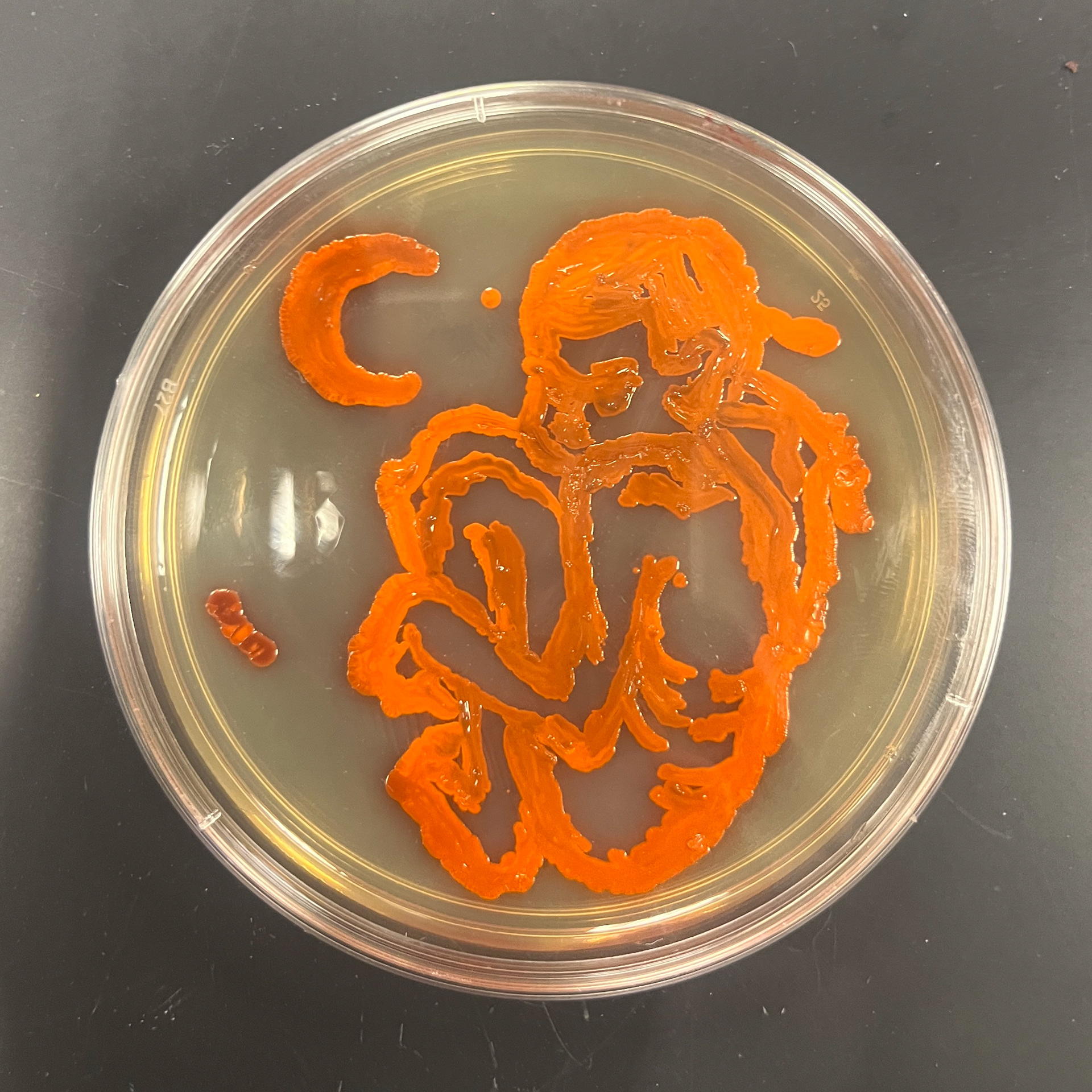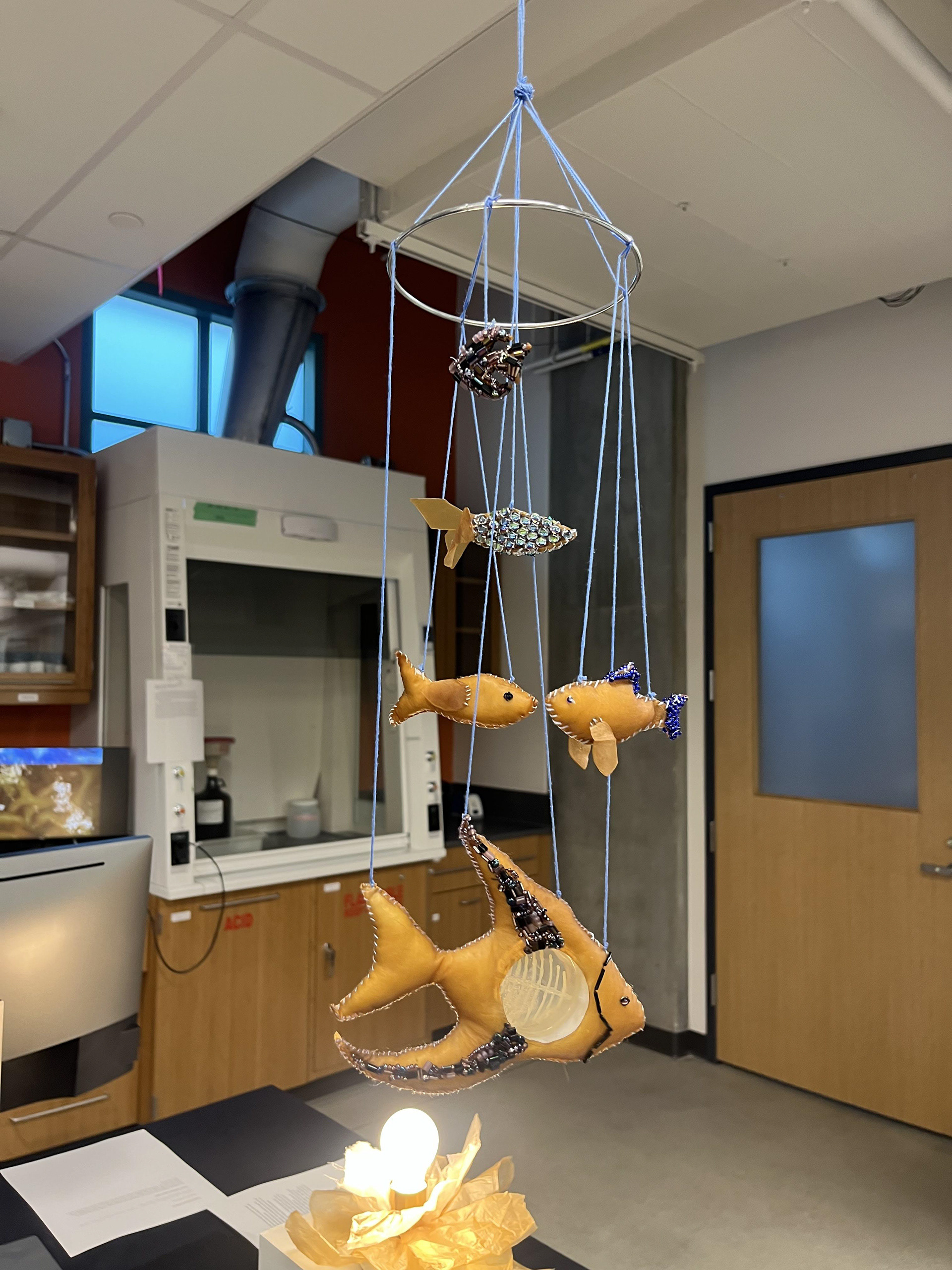
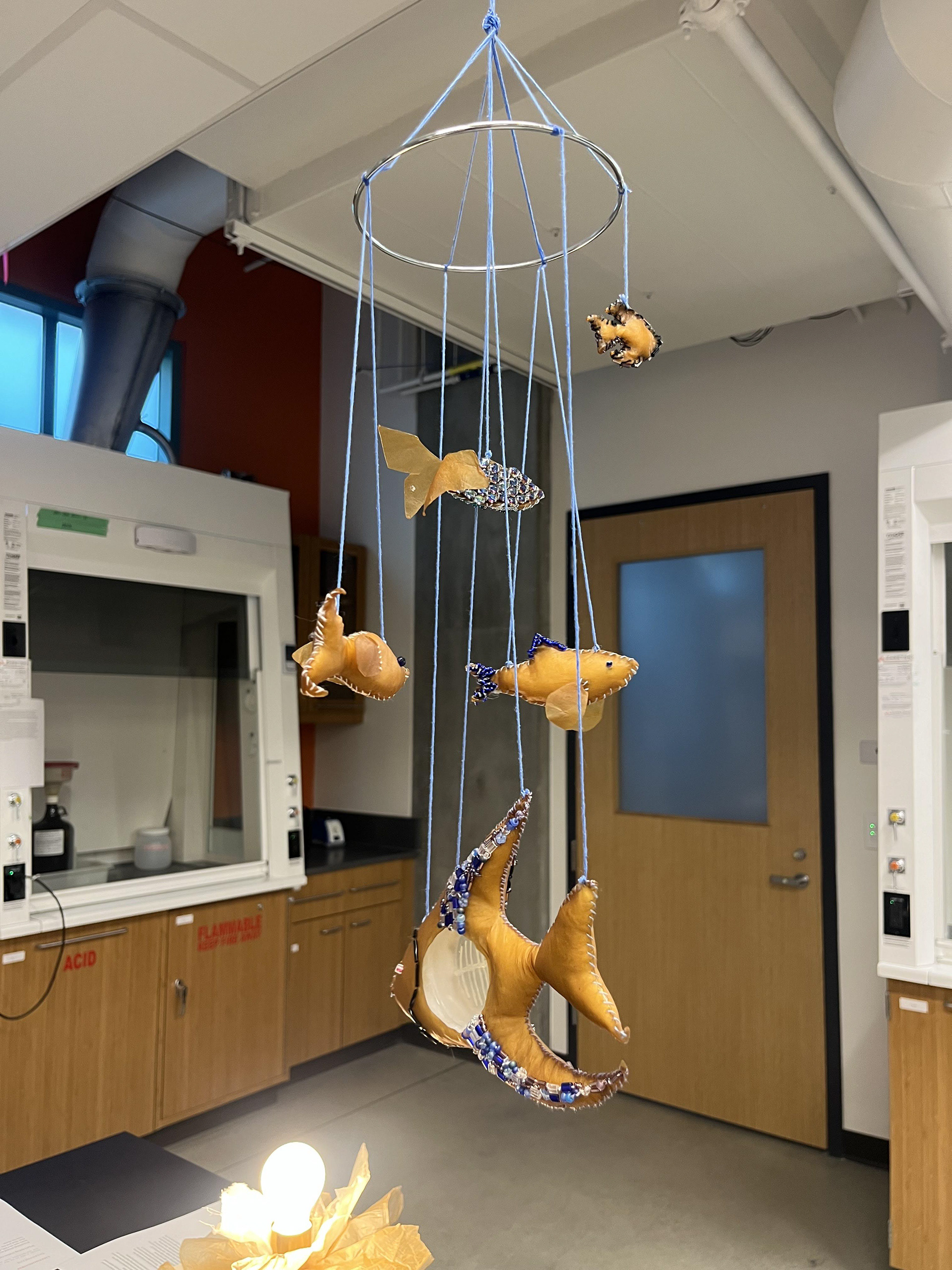
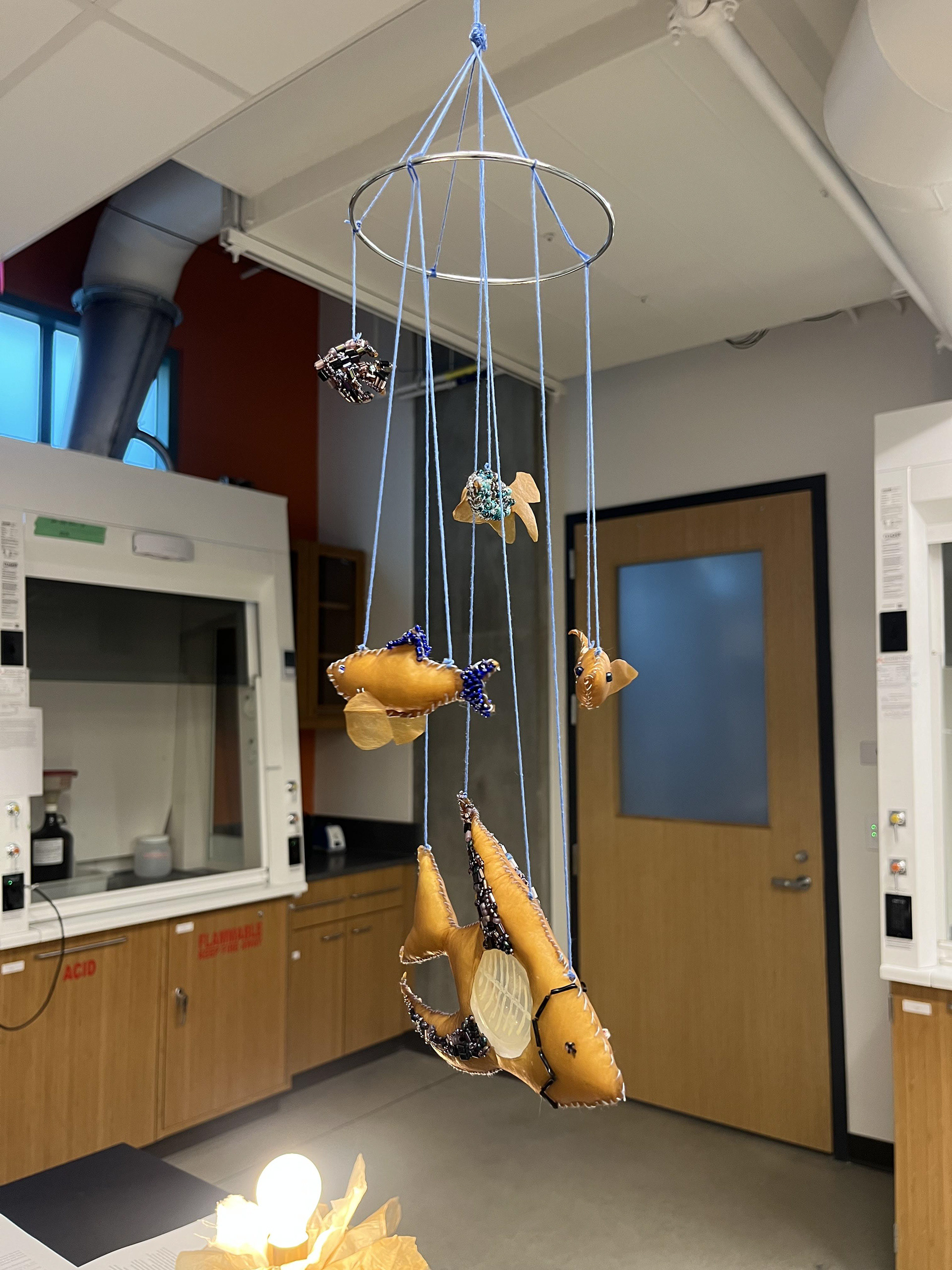
This work combines two microbial art methods: microbial cellulose and microbial painting. To make the microbial cellulose (aka kombucha scoby), I combined tea, sugar and a premade kombucha starter and then let it ferment for several weeks. After it had grown into a thick sheet, I removed it from the container, rinsed it off and put it on a wood plank to dry out. Then I made a microbial drawing of its skeleton on a petri dish using Escherichia coli which I put in the middle of the angelfish. Once the microbes had grown to my desired thickness I added a drop of chloroform so they wouldn't continue to grow. I decided on making a mobile because it is an object that is normally associated with children, and I wanted to provide the sense of childhood wonder and sentiment I feel about fish. I chose to make the central fish an angelfish because my dad always called me angelfish growing up, so it has a particular significance to me.
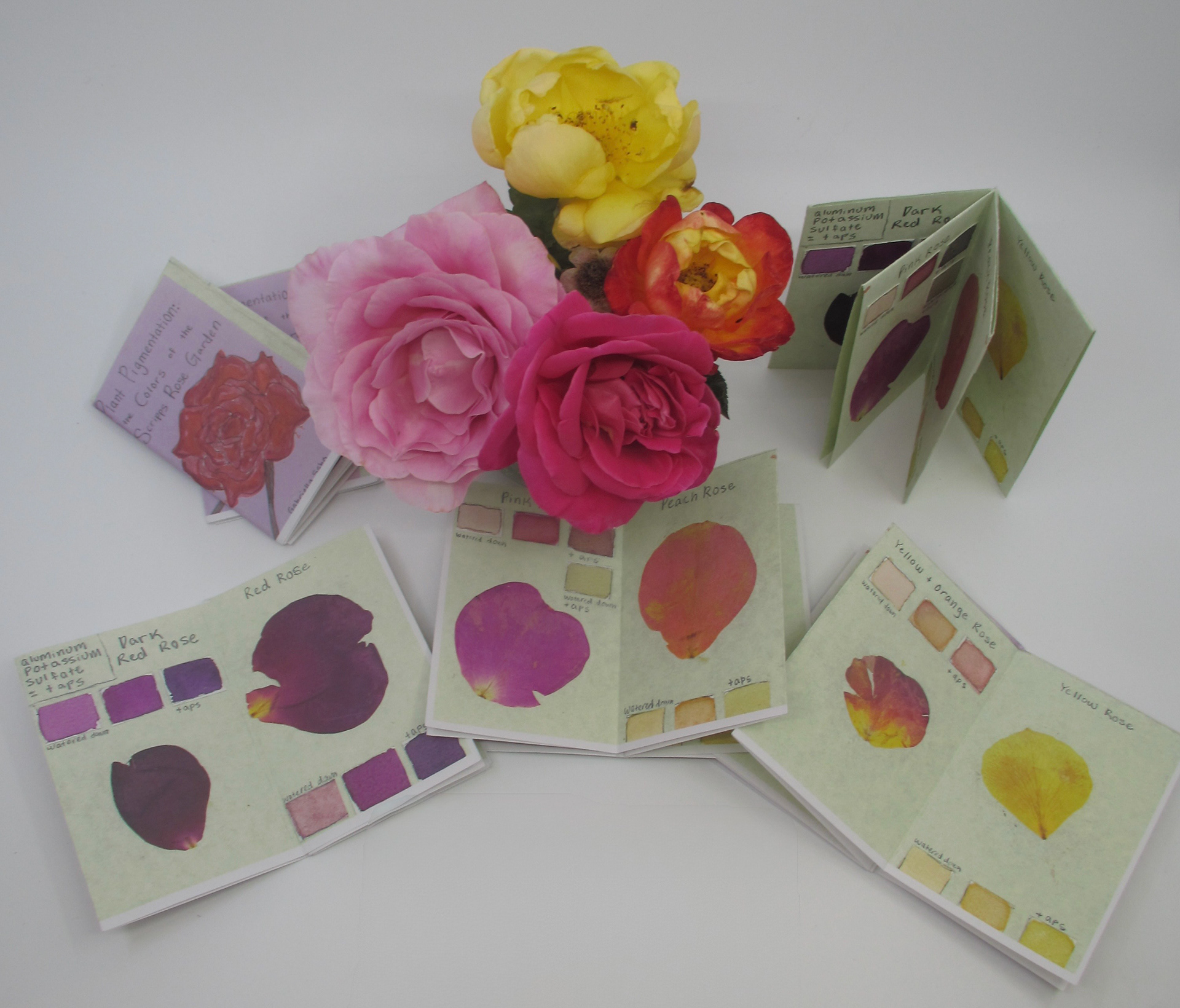
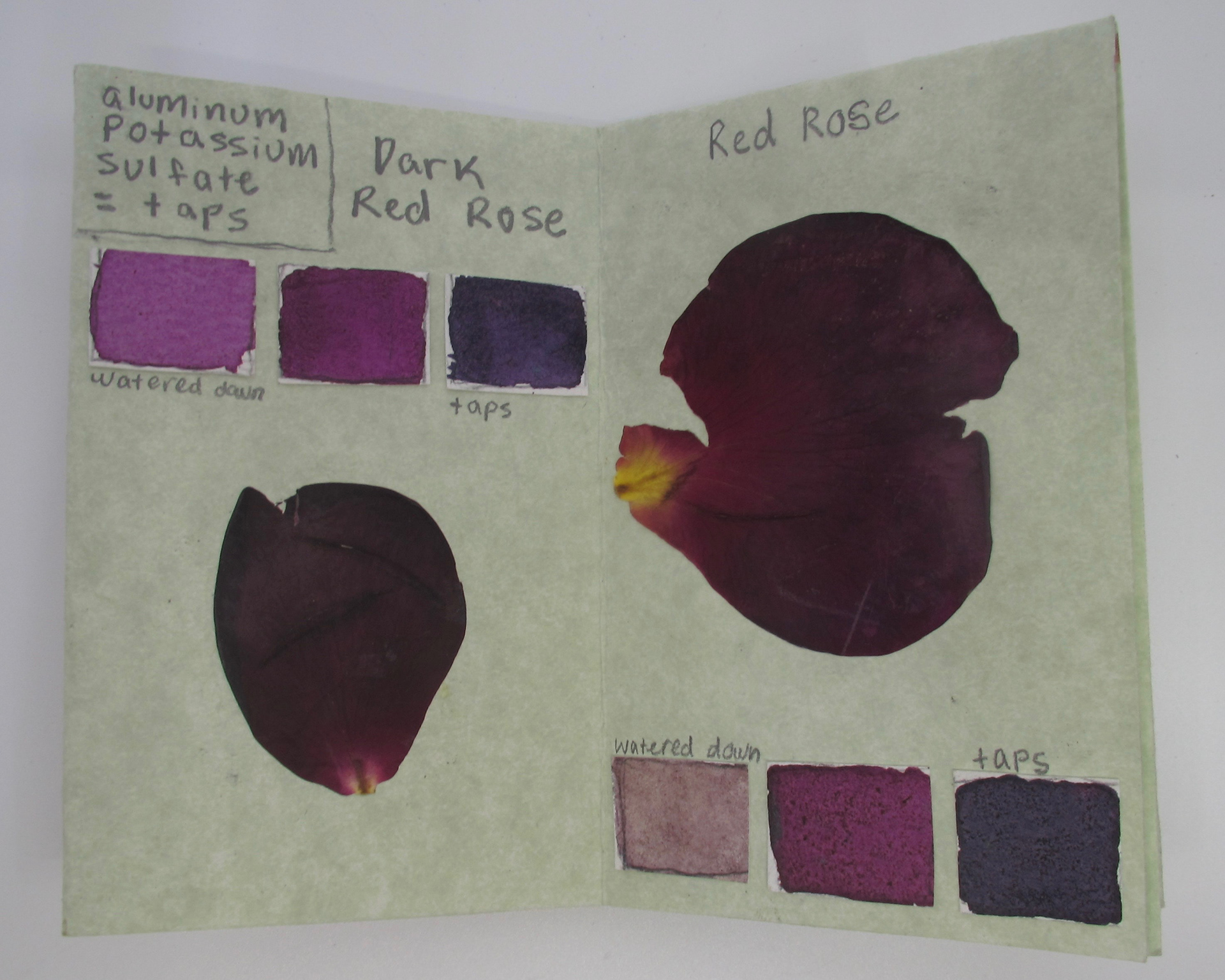
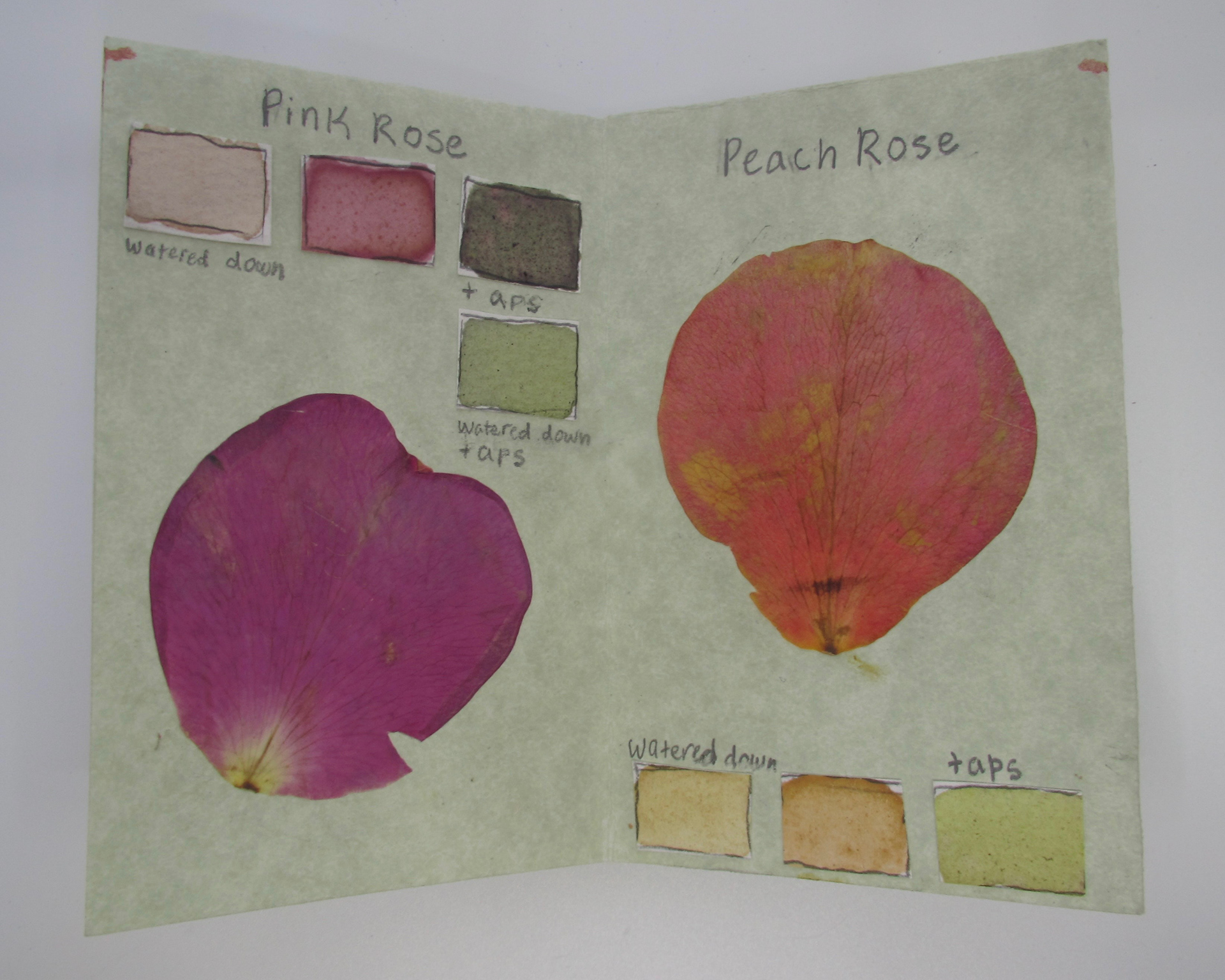
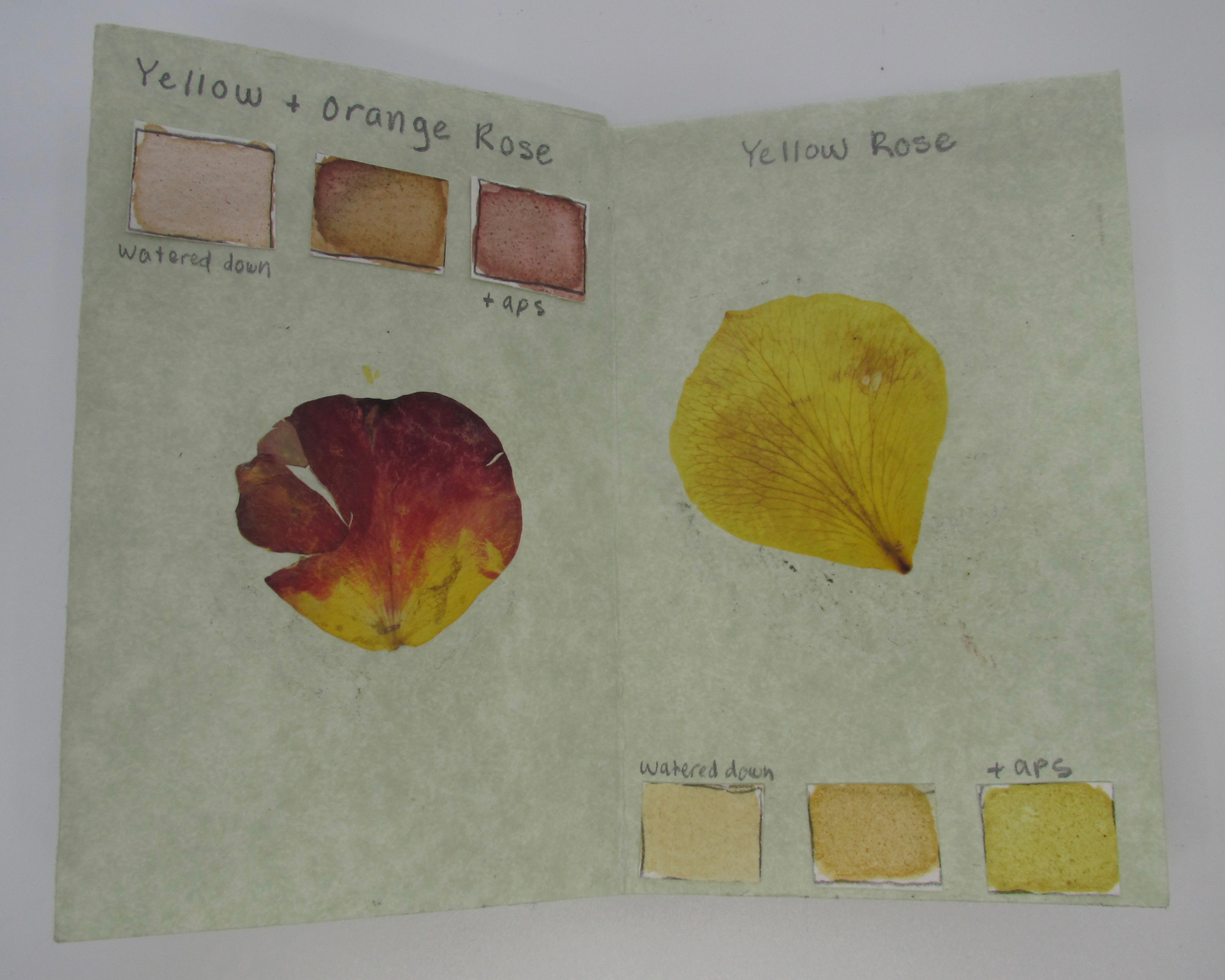
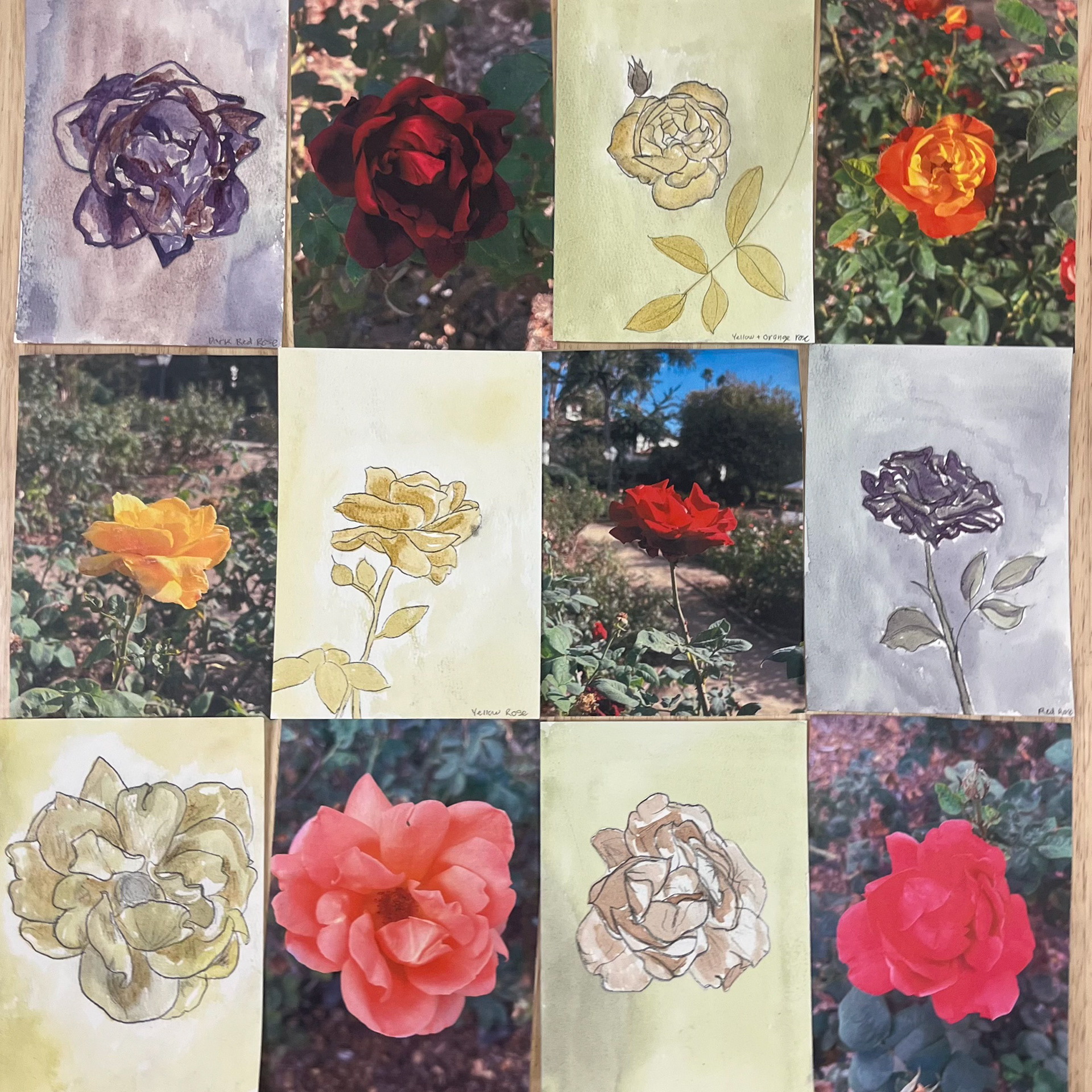
For this project, I selected 6 different colored roses from the Scripps Rose Garden that I hoped would each produce their own unique pigment. To make the pigments I ground the petals with a dollop of gum arabic and a drop of honey using a mortar and pestle, strained the mixture and then ground it further using a muller on glass. I wanted to see how many colors I could get out of just one rose, so I included swatches of the colors they produced with the normal method of plant pigmentation, when watered down, and when I added Aluminum Potassium Sulfate. i painted the roses using the pigments they produced and put them alongside photographs of the original flower.